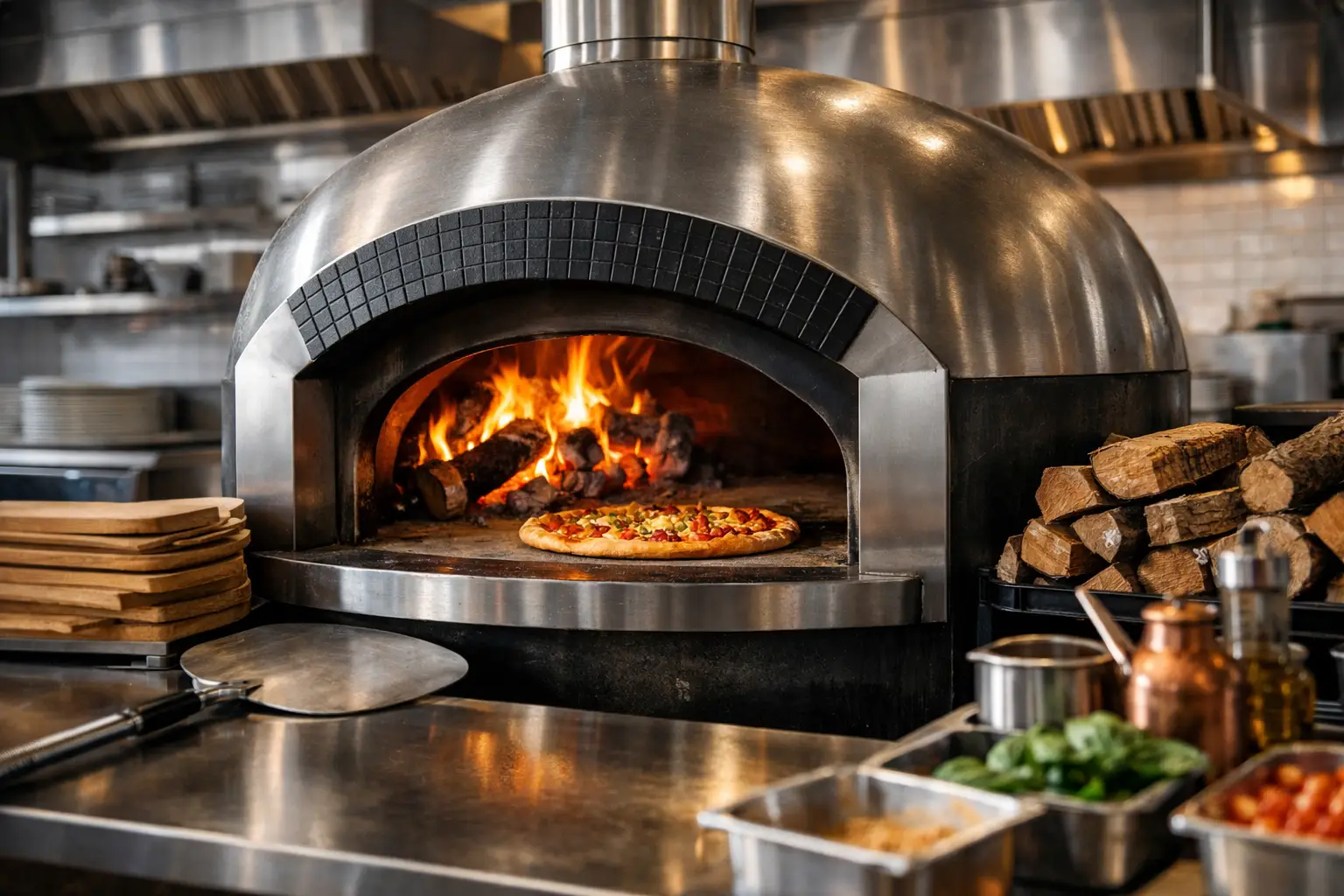
A wood-fired pizza oven earns its place when the cooking process and the guest experience both matter. The right purchase is not simply the oven with the largest flame; it is the oven that fits the menu, output, fuel handling, ventilation plan, and available service space.
What the wood fire changes
Wood brings a distinct aroma and char, but it also adds storage, ash handling, fire-safety, and staff-training requirements. Confirm how wood reaches the oven, where it is stored, how the flue is routed, and who will clean the system. For a restaurant or hotel, these questions should be answered before the counter and hood are built.
Look at the baking deck
Cookeryaki’s commercial pizza oven range uses a volcanic-stone deck. The official product page describes more than 500 natural stone pieces, a 12cm deck thickness, and temperature control up to 500°C. Those are useful reference points for a specification, but the final drawing should state the exact model, deck area, heating method, and operating range.
Wood, gas, or electric
Wood is chosen for flavor and theatre. Gas is often easier to control during a busy service. Electric can simplify indoor projects with tighter ventilation limits. Cookeryaki offers all three heating directions, so the best choice depends on the venue and local approvals.
For every project, confirm heat rejection, outdoor protection, spare-parts planning, shipping conditions, electrical configuration, and required documentation early. These details should be checked against the actual installation site rather than copied from a previous order.
Wood-fired commercial pizza oven FAQ
Is wood fire the right choice for every restaurant?
Wood fire can support a distinctive cooking style and visible flame, but it also requires fuel storage, ash handling, trained operators, fire-safety coordination, and a suitable flue. The menu and operating team should justify those requirements.
What determines real service capacity?
Deck area is only one factor. Recovery after repeated loading, door opening, dough temperature, bake profile, chamber height, and the number of products cooked at once all affect peak output. Test the specification against the busiest service period, not an average day.
What information should be reviewed before installation?
Share the floor plan, fuel preference, flue route, ventilation concept, delivery access, target output, and local documentation requirements. Cookeryaki can then review whether a standard or custom configuration is appropriate.
Talk to Cookeryaki
For a project review, send the destination country, floor plan, seating count, preferred fuel, and any site drawings to marketing@cookeryaki.com. Cookeryaki can review a configuration before quotation.