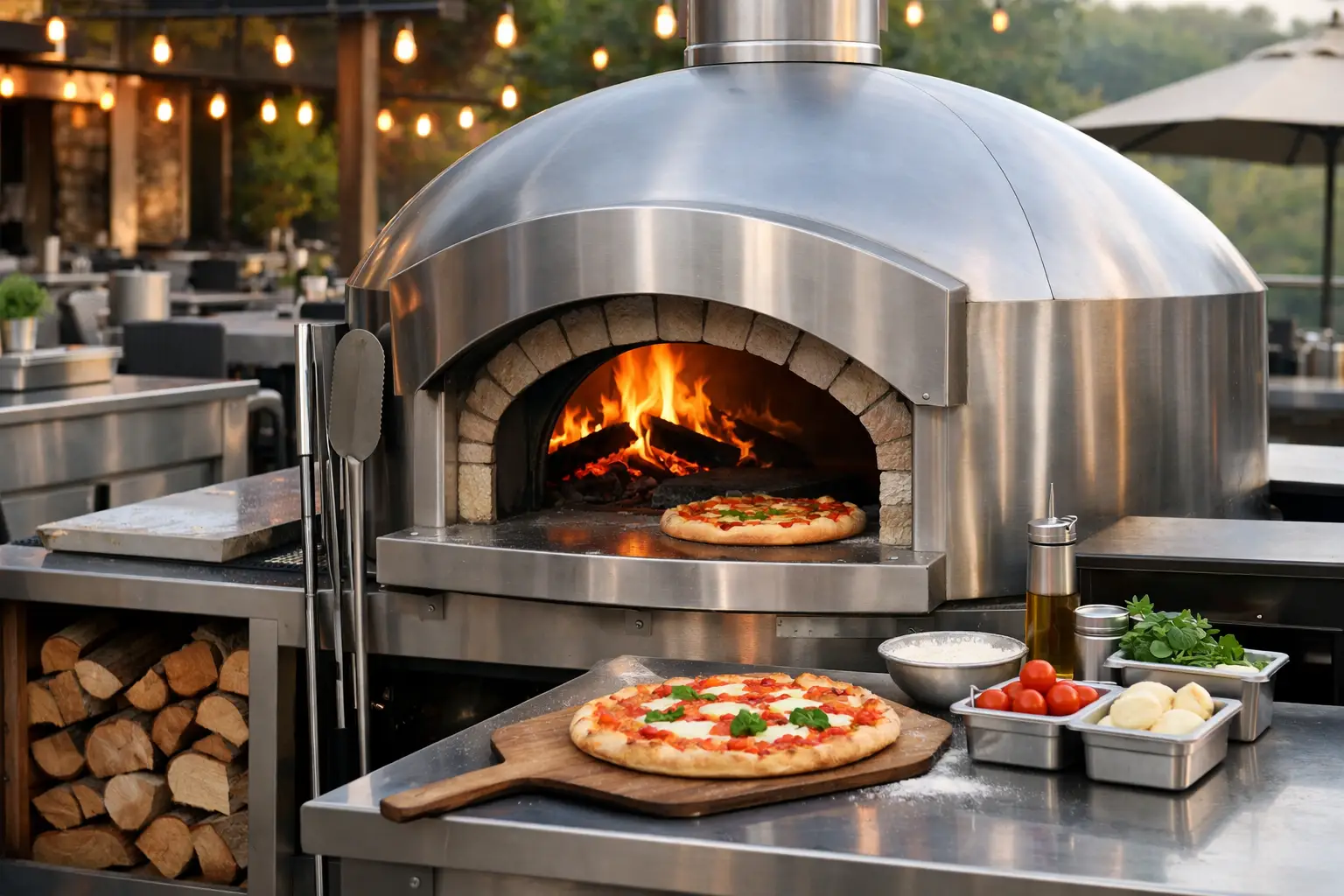
Outdoor pizza service looks simple from the dining area. Behind the scenes, the oven still needs a clear fuel plan, safe clearances, weather protection, cleaning access, and a reliable route for staff and deliveries.
Plan the site before choosing the oven
Mark the oven footprint, landing space, customer queue, fire separation, storage, and utility connections on the plan. A patio installation may have different requirements from a mobile event kitchen. Wind, rain, salt air, and direct sun also affect the enclosure and finish.
Match the heating method to the operation
Wood-fired ovens create a visible cooking experience but need disciplined fuel and ash handling. Gas-powered ovens offer repeatable operation for a busy service. Electric models can be useful where clean operation and controlled temperature matter. Cookeryaki’s range includes wood-fired, gas-powered, and electric options; the final selection should follow the local code and the menu’s production target.
Include maintenance in the quotation
Ask for cleaning access, stone-deck care, replacement parts, weather covers or enclosure details, and the responsibilities of the installer. Cookeryaki’s official materials describe lava-stone decks and temperature control up to 500°C. Treat these as model-specific specification points, not a substitute for a project drawing.
A short project brief with destination, floor plan, expected volume, fuel preference, and installation photos gives the factory a much better starting point than a product name alone.
Outdoor commercial pizza oven FAQ
Does outdoor placement remove ventilation and fire requirements?
Not automatically. Roofs, canopies, nearby walls, guest seating, wind, combustible finishes, and fuel storage can still create ventilation and fire-safety obligations. The site plan should be reviewed with the local authority and project consultants.
What should be protected from weather?
Controls, gas or electrical connections, work surfaces, insulation, finishes, wheels or supports, and the flue system all need a suitable exposure strategy. Specify the actual installation environment instead of relying on the word outdoor.
When is a mobile oven appropriate?
Mobility can help seasonal service and events, but the design still needs safe fuel connections, stable positioning, transport clearances, floor capacity, and a cleaning plan. A fixed installation is often easier when utilities and high daily output are permanent.
Talk to Cookeryaki
For a project review, send the destination country, floor plan, seating count, preferred fuel, and any site drawings to marketing@cookeryaki.com. Cookeryaki can review a configuration before quotation.