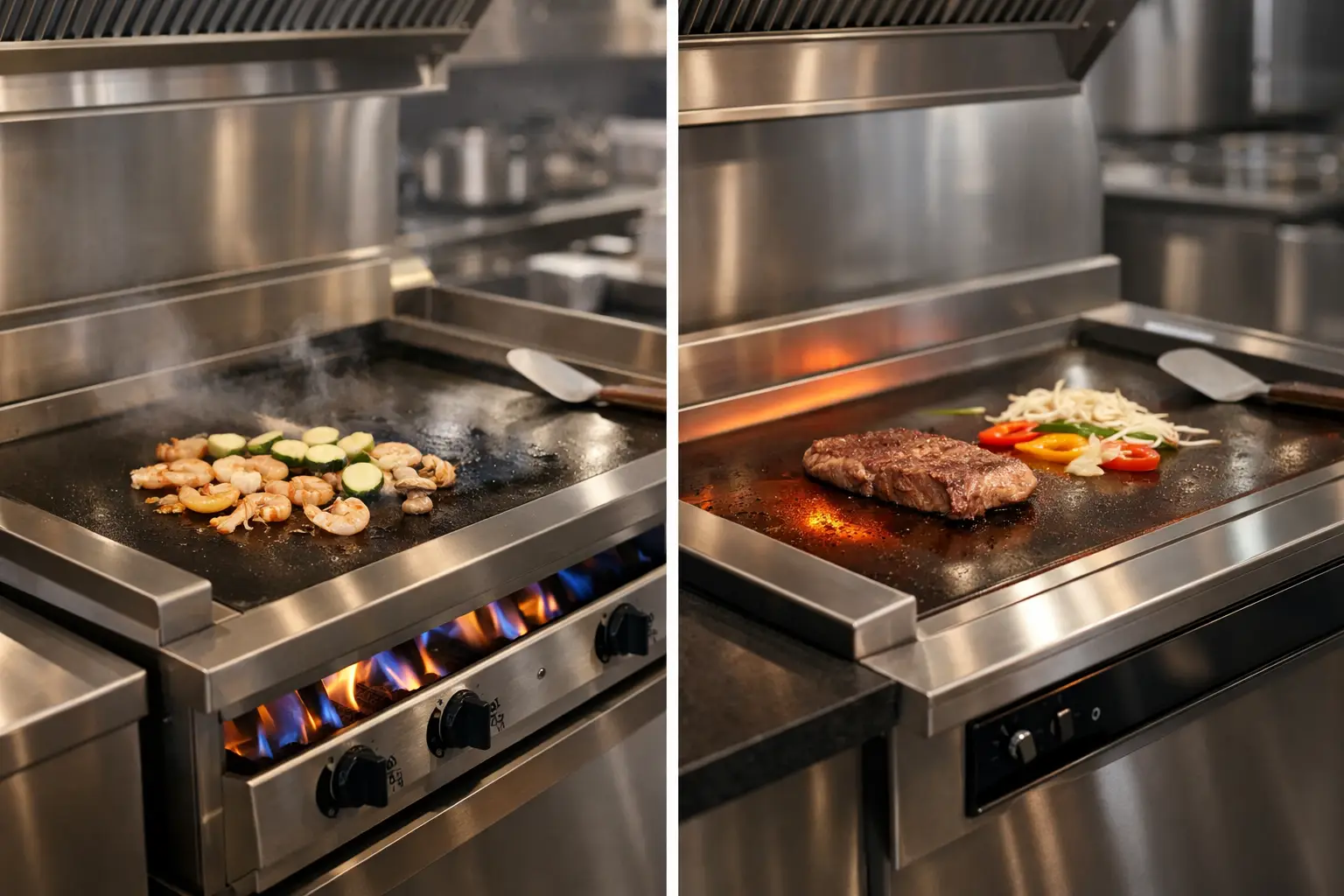
Gas and electric teppanyaki tables can both work in a commercial kitchen. The better choice depends on the building, menu, chef preference, utility capacity, ventilation route, and approval path.
Gas
Gas can suit operators who want familiar burner response and already have an approved fuel route. The design still needs piping, shutoff, combustion air, heat protection, and local inspection. Ask for input data rather than estimating from a product name.
Electric
Electric can be practical where gas is restricted or unavailable. Confirm voltage, phase, amperage, circuit capacity, heat recovery, controls, and the effect on the site’s total load. An electric table is not automatically a low-load table.
Compare the whole installation
The heat source is only one line in the specification. Compare extraction, make-up air, grease handling, access for service, spare parts, and the operating schedule. Cookeryaki offers gas and electric configurations, including smokeless options, and can review the project before quotation.
Destination utilities and documentation should be confirmed model by model. Do not copy a configuration from one project into another without checking local voltage, frequency, gas availability, ventilation, fire requirements, and the exact certification documents needed.
Gas versus electric teppanyaki FAQ
Which heat source is better for a commercial grill?
The better choice is the one that matches the site utilities, menu, control preference, ventilation plan, energy strategy, operating skills, and service support. A general claim about speed or cost is not enough for a project decision.
What electrical details must be confirmed?
Check voltage, phase, frequency, connected load, breaker and cable requirements, isolation, control configuration, and available site capacity. Do not assume a unit specified for one project can be copied to another.
What gas details must be confirmed?
Identify the gas type, supply pressure, input, connection, shutoff, combustion-air and exhaust requirements, commissioning responsibilities, and local approval. Changing the heat source later can affect the internal design and certification documents.
Talk to Cookeryaki
For a project review, send the destination country, floor plan, seating count, preferred fuel, and any site drawings to marketing@cookeryaki.com. Cookeryaki can review a configuration before quotation.