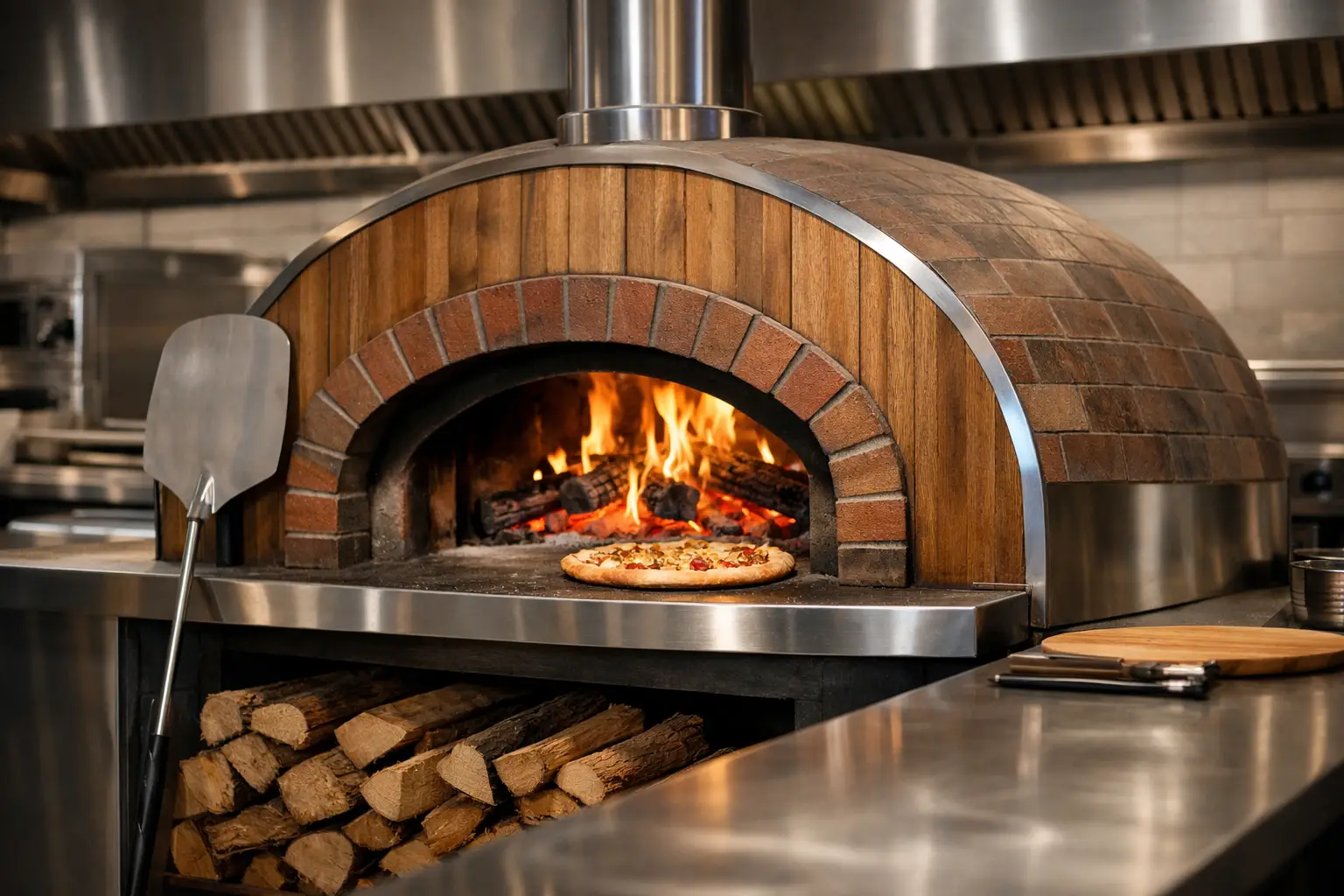
A wooden pizza kiln is generally understood in commercial foodservice as a wood-fired pizza oven or kiln, not an oven made from wood. For a restaurant, hotel, or hospitality project, the right choice depends less on its traditional appearance and more on fuel handling, heat retention, production volume, ventilation, floor loading, and the service experience the operation intends to create.
Wood-fired pizza equipment can deliver the high hearth temperatures and live-fire character associated with Neapolitan-style and artisan pizza. It can also add substantial coordination work to a project. Before selecting a unit, the buyer should define the menu, peak demand, kitchen location, exhaust path, fuel storage plan, and construction constraints. Those decisions determine whether a wood-fired kiln is practical or whether a gas, electric, or hybrid commercial pizza oven is the better operational fit.
Start With the Service Model, Not the Oven Finish
A pizza kiln should be specified around the pace of service. A compact operation producing a limited number of pizzas during dinner service has different needs from a hotel restaurant, entertainment venue, or high-volume pizzeria with continuous ticket flow.
Begin by establishing the pizza diameter, expected pies per hour at peak, target bake time, and number of pizzas that must cook simultaneously. Hearth diameter and usable cooking area matter more than exterior dimensions alone. A large dome may look impressive, but it can be inefficient if the cooking team cannot comfortably manage the fire, turn pizzas, and load product from the available working position.
Also consider whether pizza is the main business or a secondary menu category. A live-fire kiln can be a strong visual anchor for an open kitchen, but it requires trained staff who can manage fire placement, ash, hearth recovery, and product consistency. If the menu relies on predictable all-day production with limited specialist labor, a controlled gas or electric solution may reduce operating variability.
What a Commercial Wooden Pizza Kiln Requires
Wood fuel changes the equipment brief. The kiln itself is only one part of the installation. The project team must coordinate the fuel supply, combustion air, chimney or exhaust route, grease and smoke control requirements, clearances, structural support, and local authority requirements.
Fuel Storage and Daily Handling
Wood needs a dry, accessible storage location that does not obstruct prep areas, exits, or guest circulation. Staff need a defined route for bringing fuel to the oven and removing ash safely. This process should be discussed during layout planning, rather than treated as an operational detail after installation.
Fuel quality also affects performance. Inconsistent wood moisture or species can change flame behavior, smoke output, and heat recovery. Procurement teams should identify the intended fuel standard and confirm how the operator will maintain it. A kiln designed around wood firing cannot be evaluated only by its maximum temperature claim.
Ventilation and Smoke Control
Indoor wood-fired equipment requires early coordination with the mechanical engineer, contractor, and local code authority. The exhaust arrangement may involve a dedicated flue or chimney system and may require additional treatment depending on the site, building type, and jurisdiction.
An open kitchen introduces another consideration: guest comfort. A visible flame supports theater and interaction, much like a teppanyaki grill table or hibachi grill table creates a focal point for social dining. But smoke, radiant heat, and fuel handling must remain controlled so the experience feels intentional rather than disruptive.
Do not assume an existing hood designed for standard cooking equipment is suitable for a wood-fired kiln. Request a review of the full ventilation path, roof penetration, fire-rated assemblies, make-up air, and required access for inspection and cleaning.
Floor Loading, Access, and Site Conditions
Commercial kilns can be heavy, particularly units with insulated masonry-style domes and thick hearth assemblies. The structural engineer should verify floor loading before the unit is released for production or shipment. Door widths, elevators, turning radii, finished floor levels, and installation sequence should also be confirmed in advance.
For renovations, access is often the deciding issue. A kiln that fits the kitchen plan may not fit through the building route. In these cases, sectional construction, site assembly, or a different oven format may be necessary. Factory drawings should be reviewed with the contractor before final approval.
Compare Wood, Gas, and Electric Before Finalizing
The most suitable fuel type depends on the desired food result and the operation's ability to support it. Wood-fired equipment is not automatically the best option simply because the menu calls for artisan pizza.
| Option | Operational strength | Planning consideration | |---|---|---| | Wood-fired kiln | Live-fire presentation, high radiant heat, traditional baking character | Requires fuel handling, ash management, dedicated ventilation planning, and trained operators | | Gas-fired pizza oven | Faster startup and repeatable temperature management | Requires gas utility coordination and appropriate ventilation | | Electric pizza oven | Precise control and no combustion fuel storage | Requires adequate electrical capacity and may not provide a visible flame experience | | Hybrid oven | Can combine controlled heat with wood-fired character | Requires clear operating procedures and confirmation of the selected configuration |
A useful project brief explains which outcome is non-negotiable. If the priority is visible flame and a specific crust character, wood may be justified. If the priority is repeatable output across multiple shifts, utility-driven equipment may be easier to operate. Some venues use a wood-fired pizza kiln for signature service while relying on other cooking equipment for broader production demands.
Specify the Hearth, Dome, and Work Zone
A commercial pizza kiln must hold heat through the busiest service period, not simply reach a high temperature during preheat. Hearth construction, insulation, dome design, door configuration, and recovery behavior all influence how consistently it bakes after repeated loading.
Ask the manufacturer to explain the usable hearth area and recommended operating capacity for the pizza size in your menu. The chef should also review the oven mouth height and width, as these affect loading, turning, and fire management. A poorly positioned opening can slow service and increase heat exposure for the operator.
The surrounding work zone deserves equal attention. Plan adequate landing space for proofed dough, topped pizzas, tools, finished product, and safe ash handling. The pizza station should not force staff to cross a guest route or pass directly behind a teppanyaki or hibachi service line during peak periods.
Drawings Should Resolve Installation Risk Early
For commercial projects, the specification should move quickly from a concept image to a coordinated drawing package. At minimum, the project team should confirm overall dimensions, weight, hearth height, utility requirements where applicable, exhaust connection details, clearance requirements, service access, and installation method.
Custom fabrication may be appropriate when the oven must align with an open-kitchen counter, decorative enclosure, existing wall condition, or a specific chef workflow. However, custom work should not begin from an assumed site condition. Provide dimensioned plans, elevations, utility locations, finished floor information, and access constraints so the manufacturer can identify conflicts before production.
This same drawing-first approach is valuable across live-cooking equipment. Teppanyaki grill tables and hibachi grill tables require coordinated cooktop size, seating layout, gas or electric utility routing, ventilation, and cleaning access. A pizza kiln should receive the same level of technical review, especially where several cooking stations share a visible guest-facing area.
Certification and Documentation Need Model-Level Review
Certification claims should be handled carefully. Cookeryaki states that its products hold NSF and CE certification, but certification status and documentation must be confirmed for the specific model and configuration being considered. A custom enclosure, fuel type, electrical option, or regional installation condition can affect what documents are relevant to the project.
Request model-specific NSF or CE documentation, along with current technical drawings and installation information, before final procurement approval. The buyer should also verify requirements with the local authority having jurisdiction, design team, and contractor. Manufacturer documentation supports the equipment review, but it does not replace local code compliance or site-specific approval.
Build a Clear Inquiry Package
A productive manufacturer inquiry includes the menu concept, pizza size, estimated peak output, preferred fuel, indoor or outdoor location, available utilities, ventilation concept, site drawings, access route, and required delivery timeline. Photos of the installation area can also help identify practical issues that are not visible on a floor plan.
For a commercial wood-fired pizza project, send your drawings and operating brief to marketing@cookeryaki.com to request a model review, custom fabrication discussion, and model-specific documentation. A well-coordinated kiln should support the chef's pace, the contractor's installation plan, and the guest experience from the first service onward.