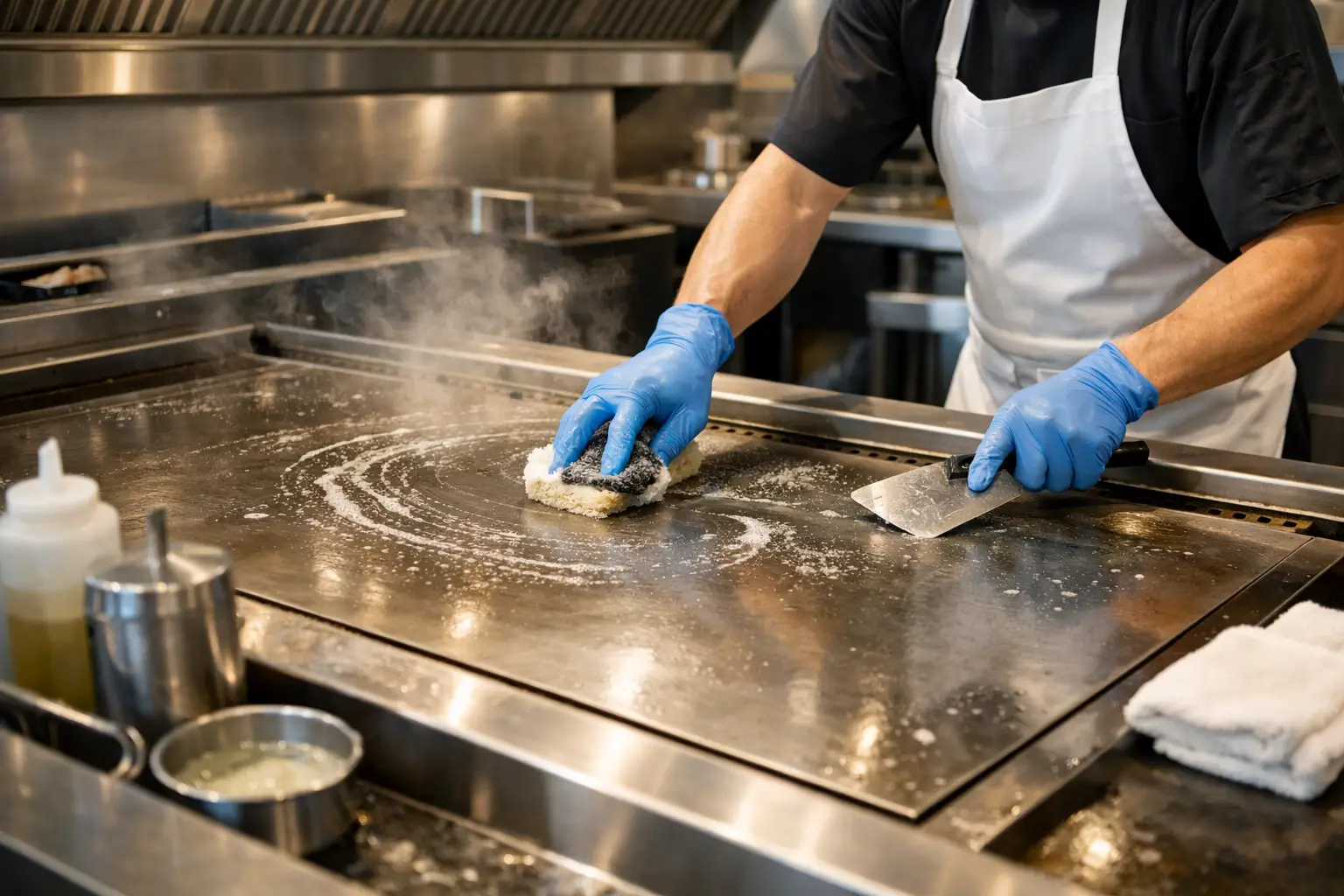
Cleaning is part of teppanyaki performance. It protects the cooking surface, keeps the guest-facing table presentable, and makes it easier to spot a small problem before it interrupts service.
During service
Follow the manufacturer’s temperature and scraping instructions. Remove food residue before it hardens, keep tools assigned to the correct task, and do not push grease into a place staff cannot reach. Never spray cold liquid onto a hot surface unless the equipment manual specifically allows it.
After service
Clean the cooking plate, grease collection points, surrounding stainless panels, handles, and the guest-side counter. Check that filters, access panels, and drain paths are seated correctly. A smokeless or ductless package adds filtration components that need their own inspection and replacement schedule.
Weekly and project-specific checks
Inspect burners or heating elements, control knobs, wiring or gas connections, extraction paths, and signs of heat damage. Cookeryaki describes Airwork six-stage filtration for selected smokeless systems; ask for the filter sequence and maintenance interval for the model installed in your venue.
The safest routine is the one written into the handover documents. Request cleaning diagrams, consumable part numbers, and the contact route for technical questions before the equipment ships.
Commercial teppanyaki cleaning FAQ
What belongs in the daily routine?
Remove food residue safely, clean the cooking surface with methods approved for that surface, empty and wash grease-collection components, wipe stainless-steel areas in the finish direction, and check filters or capture points. Staff should follow the equipment manual and the venue food-safety procedure.
Can aggressive chemicals shorten equipment life?
Yes. Unsuitable abrasives, chlorides, or prolonged chemical contact can damage finishes and seals. Confirm the approved products and concentrations for the exact model, then train staff to rinse and dry surfaces correctly.
What needs periodic technical inspection?
Check controls, heating performance, gas or electrical connections, extraction airflow, filters, seals, fasteners, and accessible internal grease paths. Record changes in heat recovery, noise, smoke capture, or odors so maintenance can be scheduled before service is disrupted.
Talk to Cookeryaki
For a project review, send the destination country, floor plan, seating count, preferred fuel, and any site drawings to marketing@cookeryaki.com. Cookeryaki can review a configuration before quotation.